Repair before replace
Screen housings, shafts and bearings for rebuild viability before recommending full replacement.
Sustainability in power transmission is not a slogan about green equipment. It is the practical work of reducing waste caused by poor selection, premature gearbox removal, undocumented oil changes and inefficient motor-drive combinations. Cone Drive frames the topic through engineering controls that an OEM or plant team can actually verify. A correctly sized worm gearbox avoids repeated field replacements. A clear lubricant interval prevents both early oil disposal and late oil failure. A repair route that identifies root cause can keep a housing, shaft or mounting package in service rather than scrapping a full drive. ISO 14001:2015 supports the management system, but the day-to-day impact is in drawings, service factors, rebuild decisions and packaging choices. We also avoid impossible promises: no oil-lubricated reducer is maintenance-free, no industrial drive has zero losses, and no supplier should claim perfect reliability. The commitments below translate sustainability into measurable engineering behavior: document the duty, repair where sensible, specify efficient motor-drive pairings, reduce avoidable returns and make compliance records easy for customers to audit. That is the sustainability language engineers can act on.
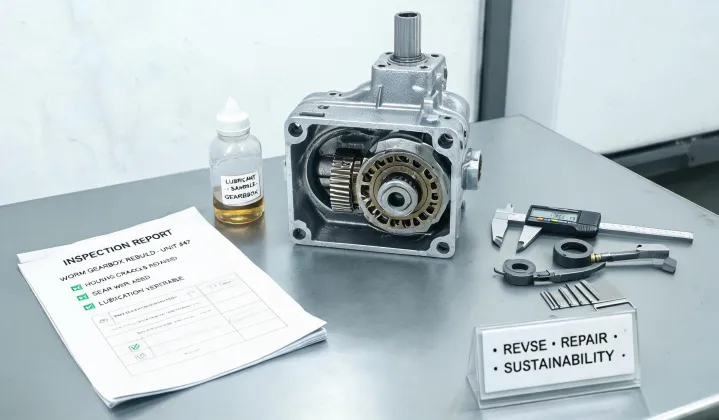
We reduce waste by specifying the right reducer for the duty, documenting lubricant intervals and recommending repair when evidence supports reuse.
Screen housings, shafts and bearings for rebuild viability before recommending full replacement.
Attach lubricant guidance to operating temperature, duty cycle and seal package.
Use duty data and service factor checks to prevent repeated underspecified installations.
Ask for lubricant interval guidance, repair evidence and compliance records for the drive family under review.